
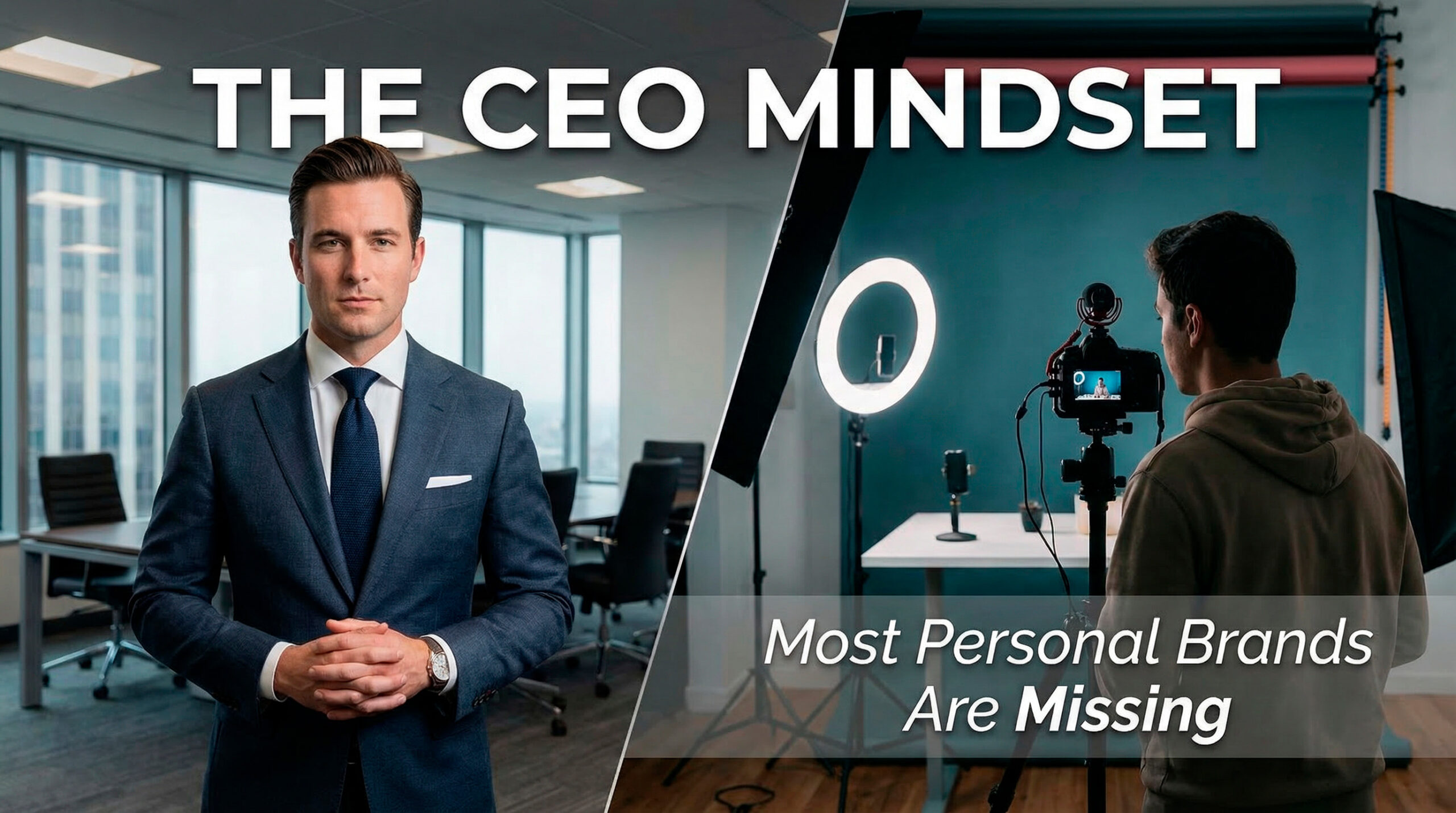
The rise of social media has created an explosion of personal brands. Millions of creators publish content daily across platforms like Instagram, YouTube, TikTok, and LinkedIn, hoping to build influence and income. Yet most personal brands never evolve into real businesses.
Why?
Because many creators think like influencers instead of CEOs.
They focus on followers, views, and virality rather than systems, ownership, and long-term revenue. The result is a fragile brand that depends entirely on algorithms and attention cycles.
To turn a personal brand into a sustainable business, the mindset has to shift—from creator to CEO.
The Difference Between a Creator and a CEO
Both creators and CEOs produce value, but the way they think about growth, revenue, and ownership is fundamentally different.
Creators tend to focus on content production and audience growth. CEOs focus on building systems that turn attention into assets.
Creator Mindset
Creators often prioritize:
- Posting consistently
- Growing followers
- Chasing trends
- Landing brand deals
- Maximizing engagement metrics
Their business model typically relies on platform visibility. If reach drops, income often drops with it.
CEO Mindset
A CEO approaches a personal brand differently. The focus shifts toward:
- Building scalable revenue streams
- Owning audience relationships
- Creating products and intellectual property
- Developing systems that generate income beyond daily content
Instead of asking “How do I get more views?” CEOs ask:
How do I turn attention into an asset?
A Simple Comparison
| Creator Focus | CEO Focus |
|---|---|
| Views and engagement | Revenue and assets |
| Short-term trends | Long-term positioning |
| Platform dependency | Audience ownership |
| Brand deals | Scalable products |
| Posting more content | Building systems |
The difference isn’t how talented someone is—it’s how they think.
Why Followers Don’t Equal Revenue
A large audience can create the illusion of success. However, follower counts rarely translate directly into business income.
Many creators with hundreds of thousands of followers struggle to generate consistent revenue.
Meanwhile, smaller creators with highly focused audiences often build profitable businesses.
The Attention vs. Monetization Gap
According to a 2024 report by Influencer Marketing Hub, the global influencer marketing industry has grown to more than $21 billion, yet most individual creators still rely heavily on brand partnerships rather than owned revenue streams.
Brand deals can be lucrative but unpredictable. A creator who depends entirely on partnerships is essentially renting their audience.
CEOs focus on converting attention into owned revenue streams.
Examples include:
- Digital products
- Courses or memberships
- Software tools
- Consulting or advisory services
- Media properties like newsletters or podcasts
This shift transforms a personal brand from an advertising channel into a business.
Building Systems Instead of Chasing Virality
Virality is exciting, but it is rarely sustainable.
Algorithms change, trends shift, and platforms evolve. When a personal brand depends entirely on viral moments, growth becomes inconsistent and unpredictable.
CEOs prioritize systems over spikes.
The System-Driven Personal Brand
Instead of asking “How can I go viral?” the CEO mindset asks:
How can I build a machine that consistently generates leads and revenue?
A strong personal brand system might include:
Content engine
Short-form and long-form content designed to attract a specific audience.
Audience capture
Email newsletters or community platforms that convert followers into owned subscribers. Tools like ConvertKit and Beehiiv help creators build and monetize newsletters.
Product ecosystem
Courses, digital resources, or premium content that solves a specific problem.
Automated funnels
Landing pages and email sequences that convert attention into customers.
Example System Flow
| Stage | Purpose | Example Tools |
|---|---|---|
| Content | Attract audience | YouTube, LinkedIn, TikTok |
| Capture | Own the audience | ConvertKit, Beehiiv |
| Nurture | Build trust | Email newsletters |
| Monetize | Generate revenue | Courses, digital products |
This approach transforms content from entertainment into the top of a revenue funnel.
Thinking Like a Long-Term Wealth Builder
The biggest difference between influencers and CEOs is time horizon.
Influencers often optimize for short-term gains: sponsorship deals, viral growth, and trending topics.
CEOs optimize for long-term wealth.
Ownership vs Exposure
Exposure creates attention.
Ownership creates wealth.
True business value comes from assets such as:
- Intellectual property
- Email lists
- Communities
- Software tools
- Scalable digital products
For example, platforms like Gumroad and Kajabi allow creators to sell digital products and courses directly to their audience.
Instead of relying on external brands, creators begin building products around their own expertise.
Compounding Over Time
When systems and assets are built correctly, growth compounds.
One piece of content can:
- Drive email subscribers
- Promote a product
- Generate recurring revenue
- Build brand authority
Over months and years, this compounding effect creates leverage—something that pure content creation rarely delivers on its own.
How to Start Thinking Like a CEO Today
Shifting from creator to CEO doesn’t require abandoning content creation. It requires changing what the content is designed to do.
Start by asking three questions:
- What problem does my audience consistently struggle with?
- How can I solve that problem with a scalable product?
- What system converts my content audience into customers?
Then build around those answers.
Focus on:
- Audience ownership (email, communities)
- Product creation
- Automation and systems
- Long-term positioning rather than short-term trends
Content becomes the marketing arm of the business—not the business itself.
The Real Goal of a Personal Brand
A personal brand should not exist only to generate attention.
It should exist to create leverage.
When creators adopt the CEO mindset, they stop chasing the algorithm and start building something that compounds over time.
Followers may create influence.
But systems create freedom.
And that is what ultimately turns a personal brand into a real business.